
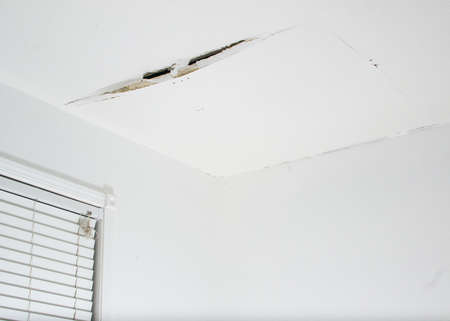
A damp stain that widens on the basement wall, a blistering paint, a lingering smell of a cellar: before you treat, you have to qualify. “Infiltration” is a catch-all word that covers three very different realities, and each type calls for a different technique. Starting with the wrong solution means losing twice: the money from the first job and the time before the real problem worsens.
Distinguishing between infiltration, condensation and capillary rise
Before any repair, stick a square of polyethylene taped to the wet area for 48 hours. If the humidity is on the room side, it’s condensation: the treatment is a matter of ventilation and thermal bridge. If it appears behind the plastic, the water comes from the outside and it is then necessary to differentiate between point infiltration (through crack, defective joint) and capillary rise (the bottom of the wall remains wet along its entire length). This $5 test avoids many erroneous diagnoses.
Treatment according to the type of wall
A buried basement wall, an above-ground wall exposed to the weather and a semi-underground garage wall are not treated in the same way. The buried wall almost always requires an intervention on the outside side or a through-injection injection. The above-ground wall is solved by caulking, flashing and sealing the envelope. The garage wall, straddling the two, often requires a combination of the two approaches plus a resumption of the perimeter drainage.
Comparison of treatment techniques
The choice of method depends on the source of the water and the accessibility of the wall. Here are the four most commonly used approaches in Quebec:
| Technical | Typical | Durability | Access required |
|---|---|---|---|
| Polyurethane | through-hole crack | 20+ years | Interior only |
| Exterior | Degraded | 25 to 40 years | Excavation |
| Water-repellent | above-ground wall | 10 to 15 years | Exterior surface |
| French | Chronic | 30+ years | Peripheral excavation |
Why a simple surface sealant fails
Many homeowners start by applying a waterproofing plaster on the inside. In the majority of cases of a through crack, it is doomed to failure: the water pushes on the other side under hydrostatic pressure and ends up peeling off the layer. Worse, the moisture remains trapped in the concrete and spreads laterally. For a buried wall, only waterproofing from the outside or structural injection seals durably.
Signs to Escalate to an Inspection
There are certain symptoms that prevent you from staying in DIY mode: the presence of black mold on more than 1 m², the simultaneous appearance of moisture on two adjacent walls, efflorescence on a parallel concrete slab , or the sound of dripping behind the wall after a rain. In these cases, a professional foundation inspection can identify the entry point(s) before spending on work.
Frequently asked questions about the treatment of an infiltration
Can you treat a minor infiltration yourself?
Yes for a fine crack that does not evolve in an above-ground garage, with a quality polyurethane sealant after it has completely dried. No for any through-hole crack in a buried wall: the water pressure exceeds what a surface sealant can handle.
How long do we have to wait to see the result?
After an exterior injection or waterproofing, the wall takes two to six weeks to dry completely. Before this period, do not repaint or re-glue any finish so as not to trap residual moisture.
Can untreated infiltration weaken the structure?
yes. Reinforced concrete rusts when water reaches the steel bars, and repeated freezing fragments the concrete. Within a decade, ignored infiltration could go from an aesthetic inconvenience to a costly structural problem.
Is the treatment covered by home insurance?
Rarely for the repair itself. Damage to rooms (floors, partitions, belongings) can be covered if the event is sudden and accidental, but not if the infiltration is the result of a known maintenance defect.
Need a Crack Repair Expert?
If the moisture persists despite an initial test of treatment, it is best to avoid stacking the layers. Ask for a free quote so that a technician can identify the right technique to apply for your type of wall.